
Our Heritage
Unveiling India’s Treasures: A Heritage Odyssey
Explore the timeless beauty and rich cultural heritage of India through Our Heritage page, where we showcase captivating photographs of iconic landmarks, ancient monuments, and breathtaking landscapes from across the subcontinent. Immerse yourself in the history, architecture, and diversity of India’s heritage sites, and embark on a visual journey that celebrates the nation’s storied past and vibrant legacy.
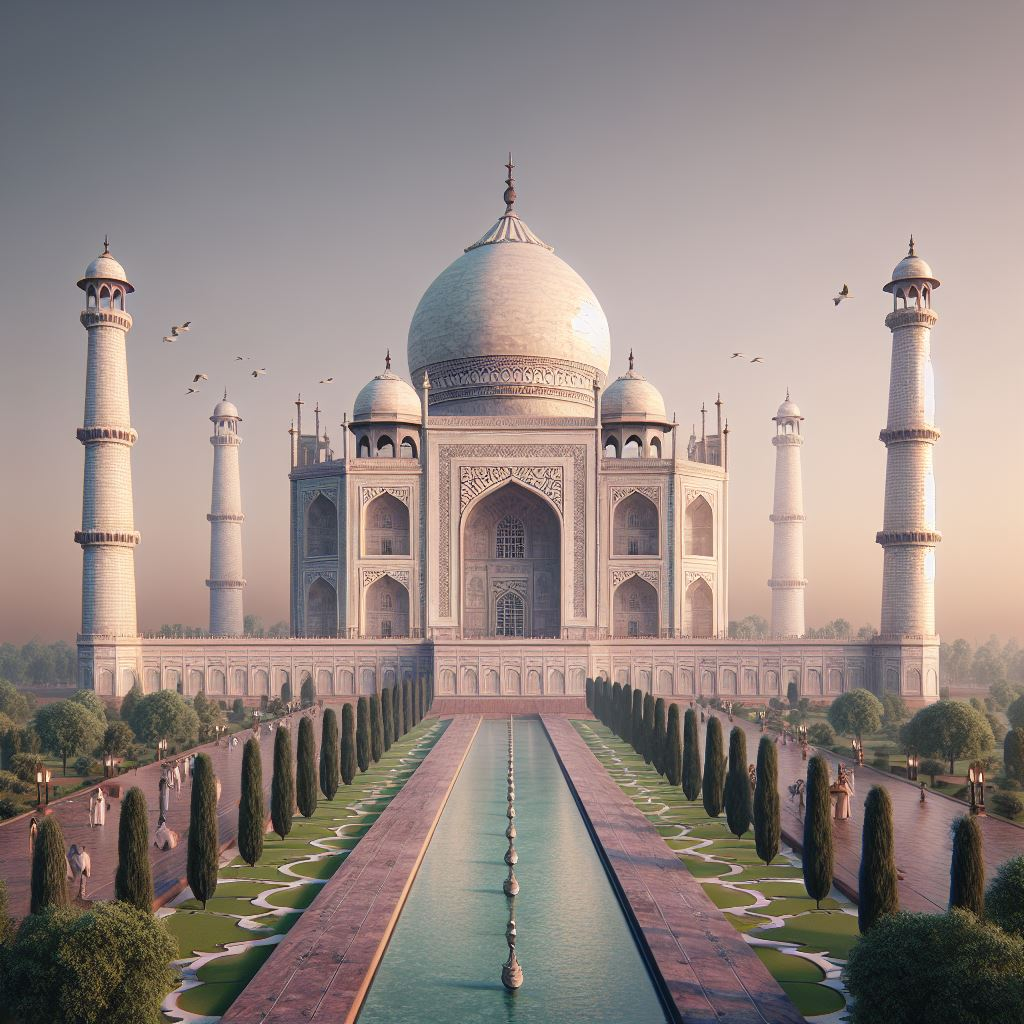
Taj Mahal
The Taj Mahal, an architectural masterpiece and a symbol of eternal love, stands as a testament to the timeless beauty of India’s heritage. Built by Emperor Shah Jahan in memory of his beloved wife Mumtaz Mahal, this white marble marvel is renowned for its exquisite craftsmanship and symmetrical perfection. Nestled on the banks of the Yamuna River in Agra, it is not only a UNESCO World Heritage Site but also a monument that captures the imagination of millions, drawing visitors from across the globe to marvel at its breathtaking beauty and intricate detailing. A visit to the Taj Mahal is a journey through history, romance, and unparalleled architectural grandeur.
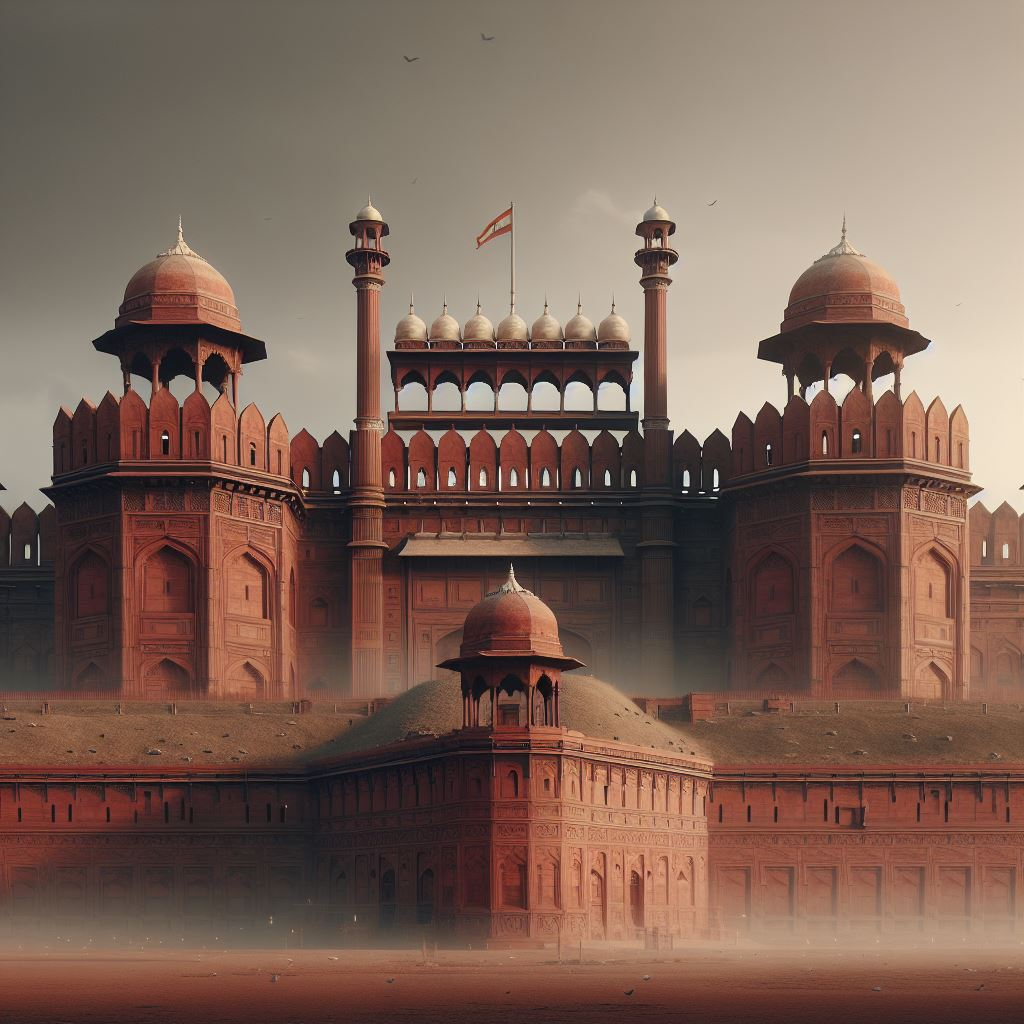
Red Fort
The Red Fort, a majestic symbol of India’s rich Mughal heritage, stands proudly in the heart of Old Delhi. Constructed by Emperor Shah Jahan in the 17th century, this imposing fortress with its iconic red sandstone walls served as the seat of Mughal power for centuries. Its intricate marble palaces, sprawling gardens, and ornate pavilions bear witness to a bygone era of opulence and grandeur. Today, the Red Fort remains a UNESCO World Heritage Site and a poignant reminder of India’s illustrious past, attracting visitors from around the world to admire its architectural splendor and historical significance.
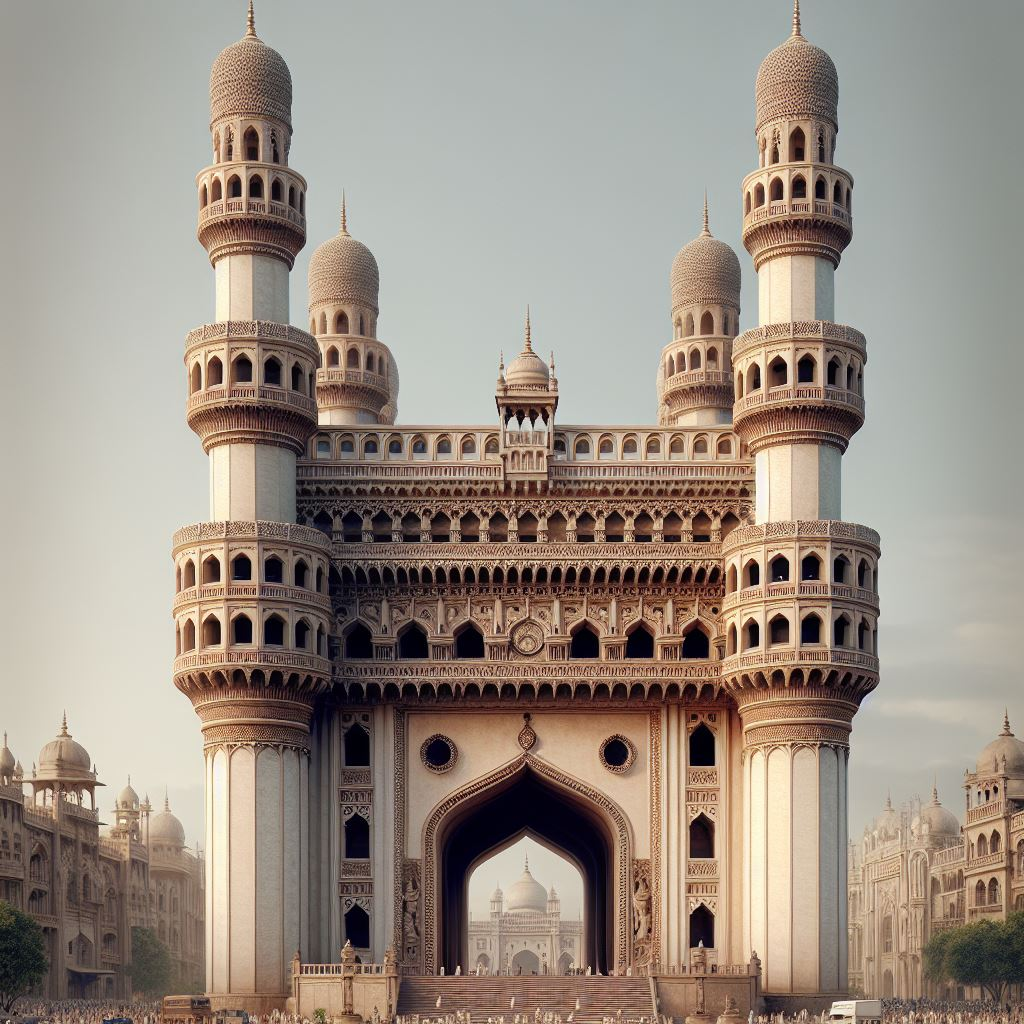
Charminar
Charminar, a iconic monument in Hyderabad, India, is a splendid testament to the city’s rich history and architectural grandeur. Built in 1591 by Sultan Muhammad Quli Qutb Shah, it stands as a symbol of Hyderabad’s cultural heritage. Its four graceful minarets soar majestically, overlooking bustling markets and vibrant streets. The Charminar’s intricate Islamic-style architecture, with its arched balconies and towering domes, continues to captivate visitors from around the world, offering a glimpse into the city’s glorious past.
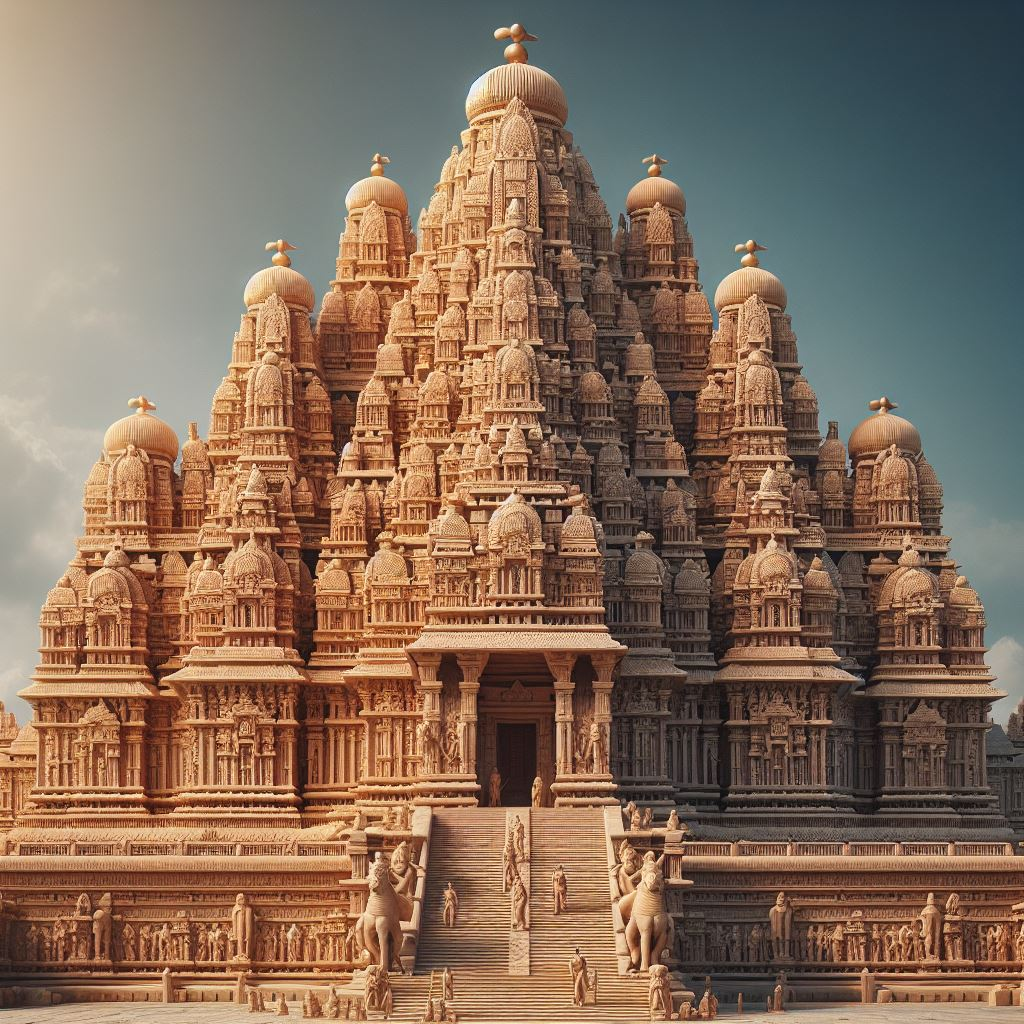
Great Living Chola Temples
The Great Living Chola Temples, a UNESCO World Heritage Site, are a trio of magnificent temples in Tamil Nadu, India, built during the Chola dynasty’s reign. Among them, the Brihadeeswarar Temple in Thanjavur stands out as a masterpiece of Dravidian architecture, renowned for its towering vimana (temple tower) and intricate carvings. The Airavatesvara Temple in Darasuram and the Gangaikonda Cholapuram Temple in Gangaikonda Cholapuram are equally impressive, reflecting the Chola Empire’s cultural and architectural achievements. These temples remain vibrant centers of worship and pilgrimage, preserving the legacy of one of South India’s greatest dynasties.
Ajanta Caves
The Ajanta Caves, nestled amidst the rugged terrain of Maharashtra, India, are a UNESCO World Heritage Site renowned for their ancient Buddhist rock-cut cave temples. Carved into the volcanic rock cliffs, these caves date back to the 2nd century BCE and showcase exquisite paintings and sculptures depicting the life of Buddha and scenes from Jataka tales. These masterpieces of Indian art and architecture offer a fascinating glimpse into the rich cultural and religious heritage of ancient India, attracting visitors from around the world to marvel at their beauty and historical significance.
Elora Caves
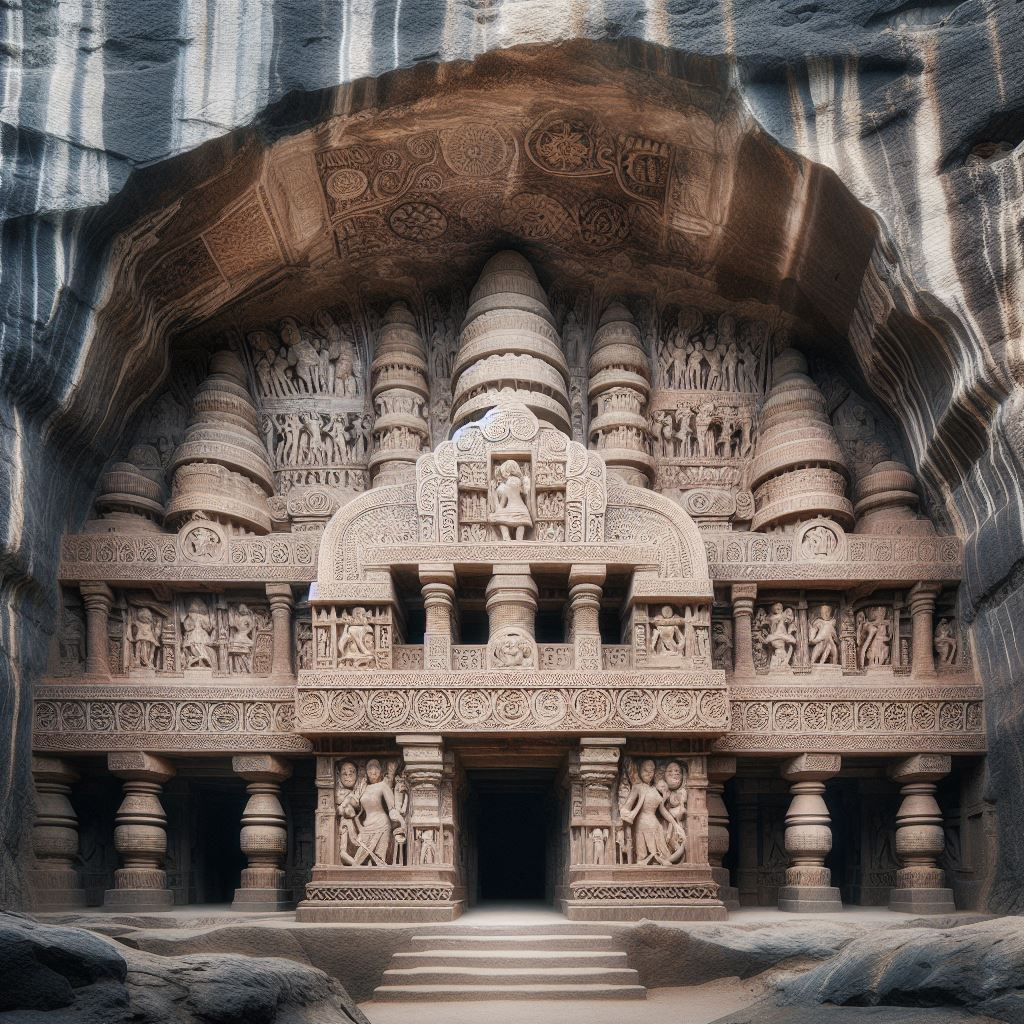
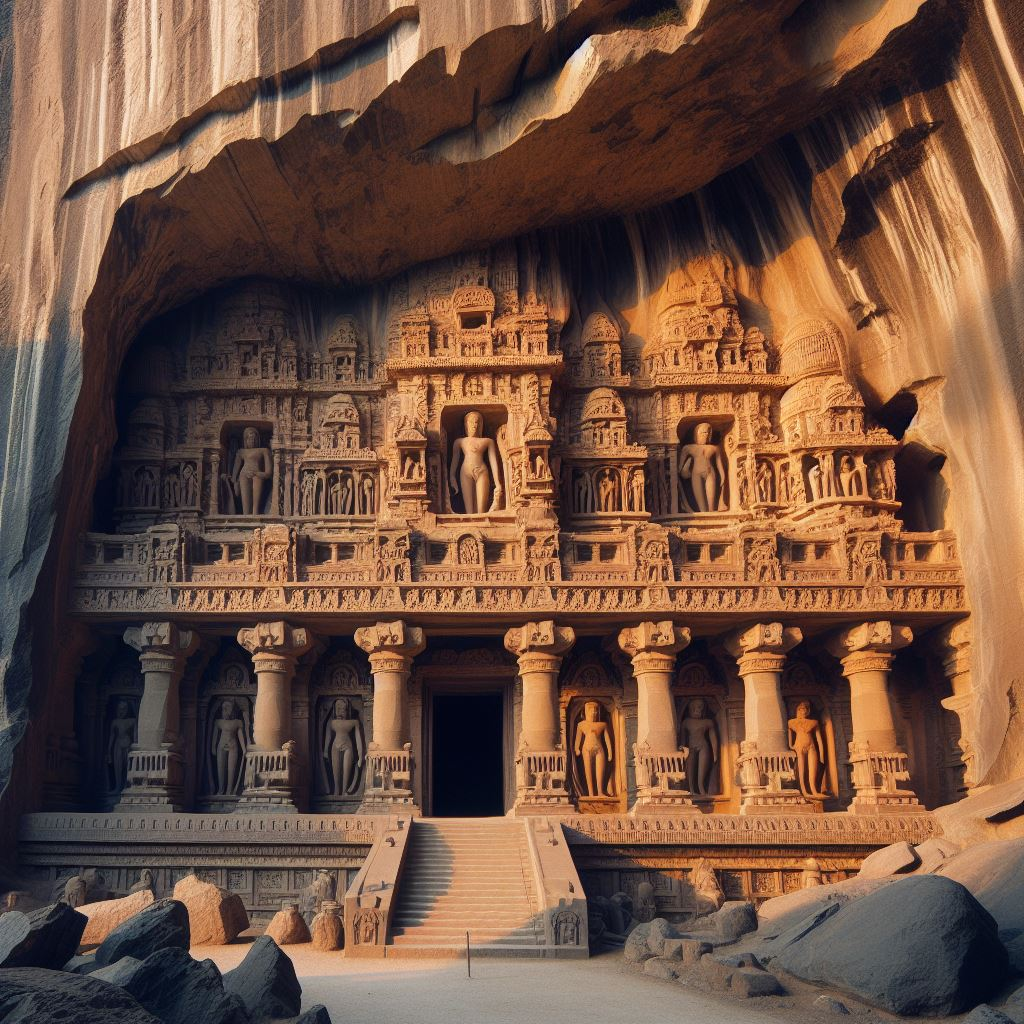
The Ellora Caves, located in Maharashtra, India, are a UNESCO World Heritage Site renowned for their extraordinary rock-cut architecture spanning Hindu, Jain, and Buddhist traditions. Dating back to the 6th to 10th centuries, these caves feature intricately carved temples, monasteries, and shrines carved into the Charanandri hills. The site showcases a remarkable fusion of religious beliefs and architectural styles, with elaborate sculptures and detailed carvings depicting mythological narratives and spiritual teachings. Visiting the Ellora Caves offers a mesmerizing journey through India’s ancient past, attracting tourists and historians alike to explore its breathtaking beauty and historical significance.
Mahabodhi Temple Complex
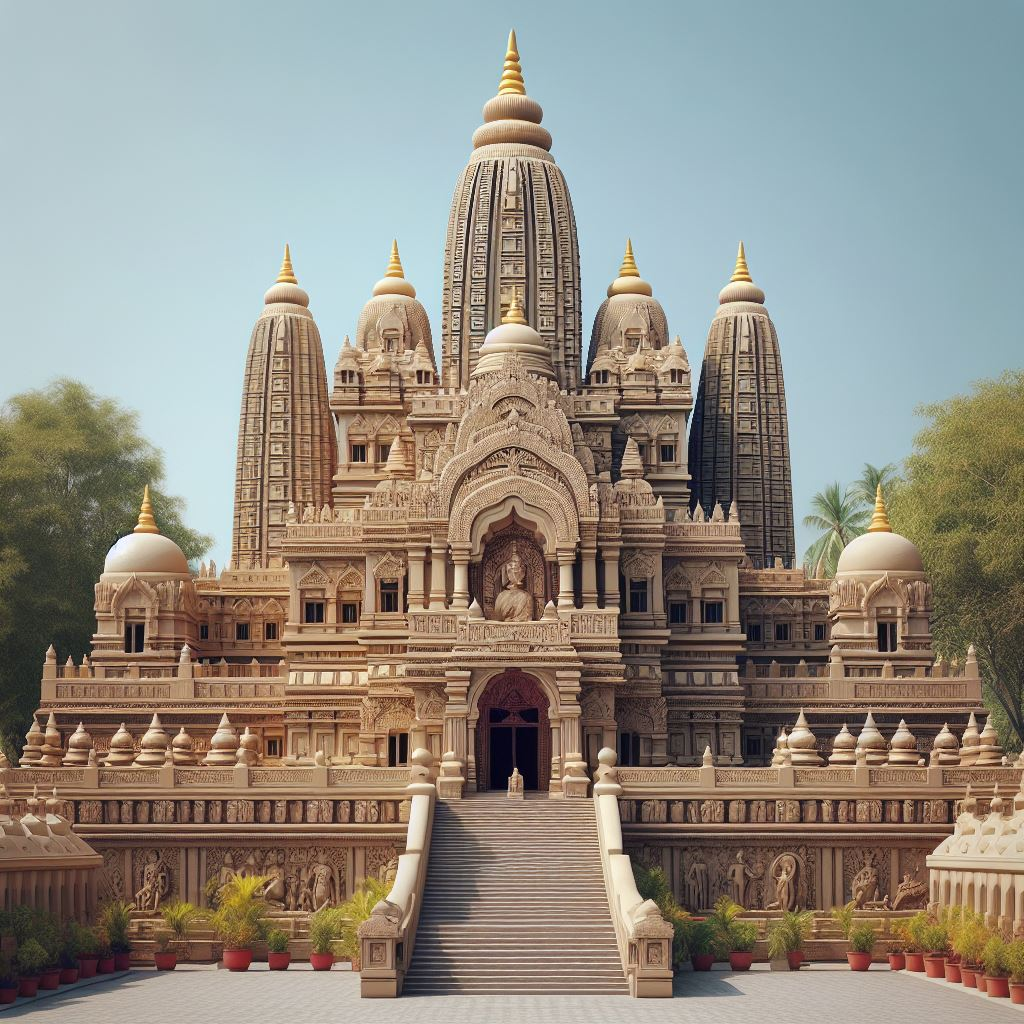
The Mahabodhi Temple Complex in Bodh Gaya, Bihar, is a UNESCO World Heritage Site and one of the holiest Buddhist pilgrimage destinations. It marks the spot where Siddhartha Gautama, the Buddha, attained enlightenment under the Bodhi tree over 2,500 years ago. The main temple, adorned with intricate carvings and a soaring spire, houses a sacred Bodhi tree descendant, symbolizing spiritual awakening. Surrounded by serene gardens and ancient stupas, the Mahabodhi Temple Complex continues to be a place of reverence and contemplation for millions of devotees and visitors from around the world.
Jaisalmer Fort
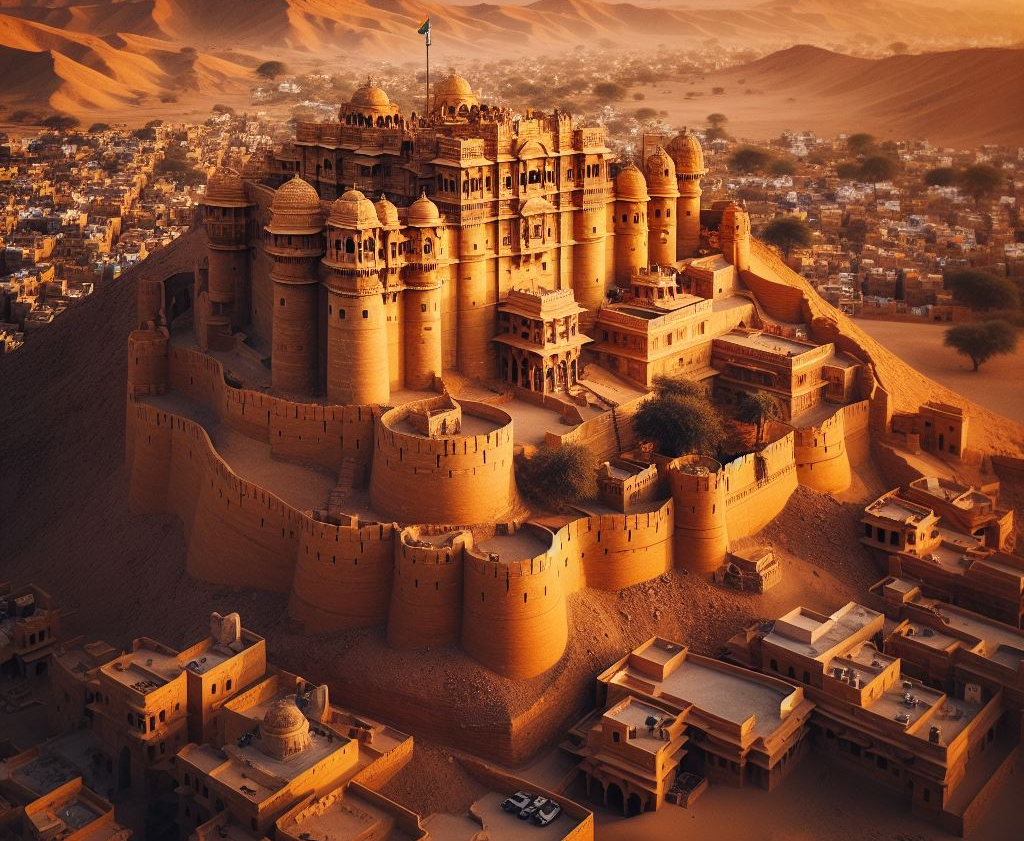
Rising majestically from the golden sands of the Thar Desert, Jaisalmer Fort is a UNESCO World Heritage Site and one of Rajasthan’s most iconic landmarks. Constructed in the 12th century, this imposing sandstone fort is a testament to the architectural brilliance of its time, with intricately carved facades and towering bastions. Within its walls lie a labyrinth of narrow lanes, bustling bazaars, and ornate havelis, offering a glimpse into the vibrant culture and heritage of the desert city. As the only living fort in India, Jaisalmer Fort continues to be inhabited by locals, making it a living testament to Rajasthan’s rich history and enduring legacy.
Churches and Convents of Goa
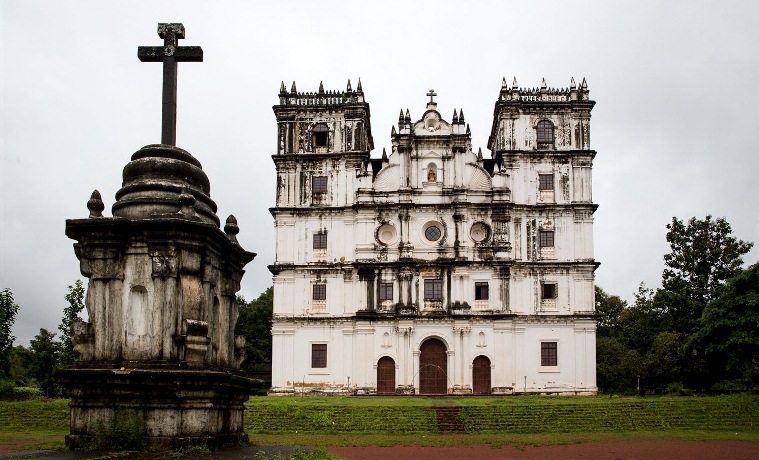
The Churches and Convents of Goa, a UNESCO World Heritage Site, are a testament to the rich history of Portuguese colonization in India. Dating back to the 16th century, these magnificent structures showcase a blend of European and Indian architectural styles. From the imposing Basilica of Bom Jesus to the intricately decorated Church of St. Francis of Assisi, each building reflects Goa’s vibrant cultural heritage and religious diversity. These churches and convents continue to serve as centers of worship and cultural significance, drawing visitors to marvel at their beauty and historical significance.
Jama Masjid
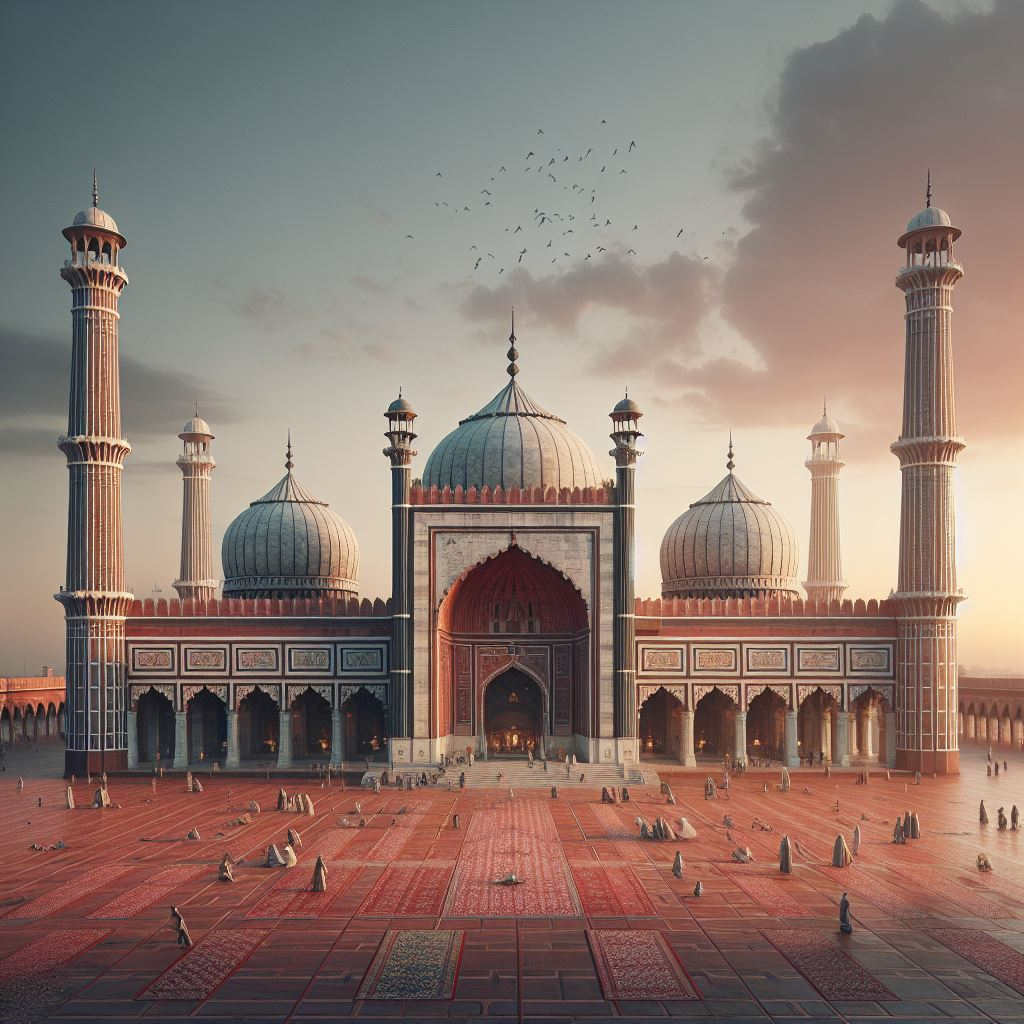
Jama Masjid, located in Old Delhi, is one of the largest and most renowned mosques in India. Built by Emperor Shah Jahan in the 17th century, it stands as an architectural marvel, showcasing the grandeur of Mughal design with its red sandstone and white marble façade. The mosque’s vast courtyard can accommodate thousands of worshippers, who gather for daily prayers and special occasions. Jama Masjid’s imposing minarets and three domes dominate the skyline of Old Delhi, offering a striking symbol of Islamic heritage in India.
Golden Temple
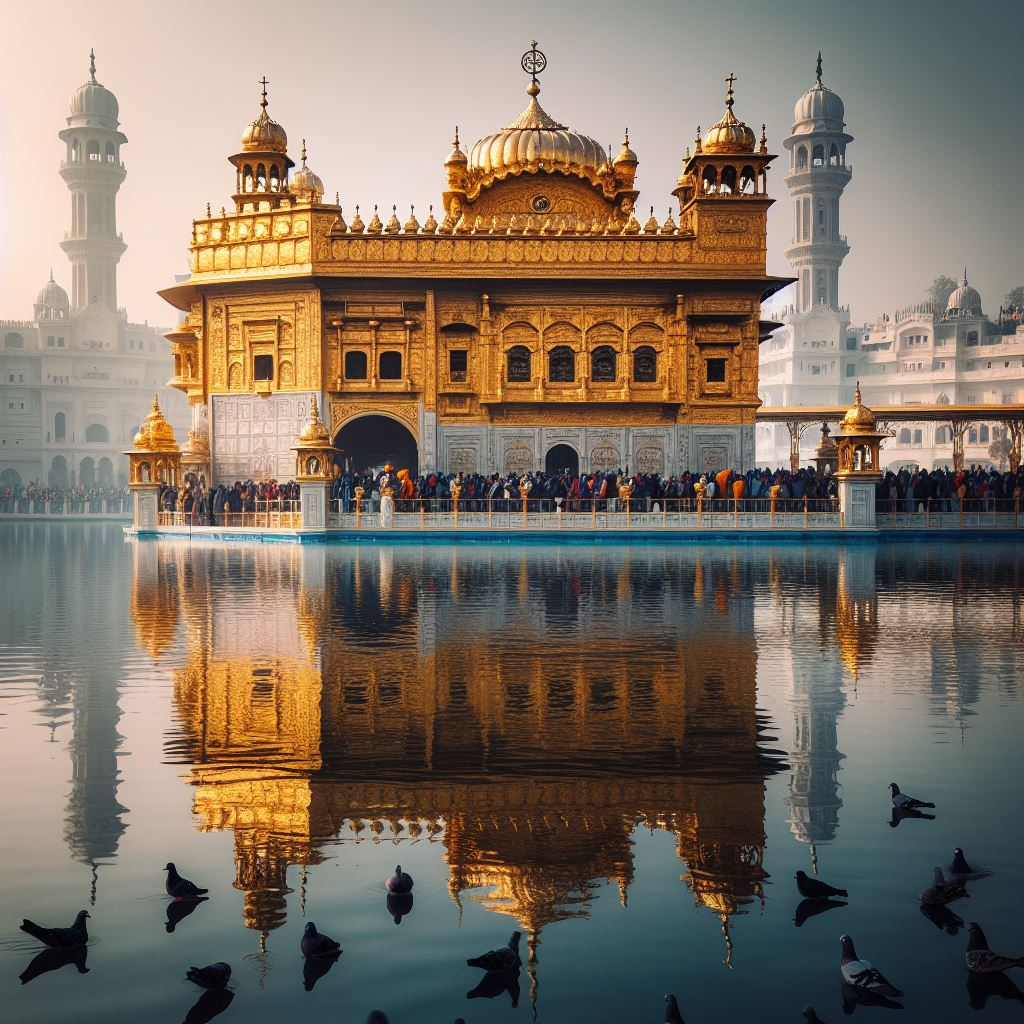
The Golden Temple, also known as Sri Harmandir Sahib, is a sacred Sikh shrine located in Amritsar, Punjab, India. Adorned with gold leaf and surrounded by a serene sarovar (pool of water), it is one of the most revered spiritual destinations in the world. The temple welcomes people of all faiths to partake in langar (community meal) and experience its message of equality and service. Its gleaming golden exterior and tranquil ambiance make it a beacon of peace and unity, drawing millions of pilgrims and tourists each year to bask in its divine aura.
Sun Temple
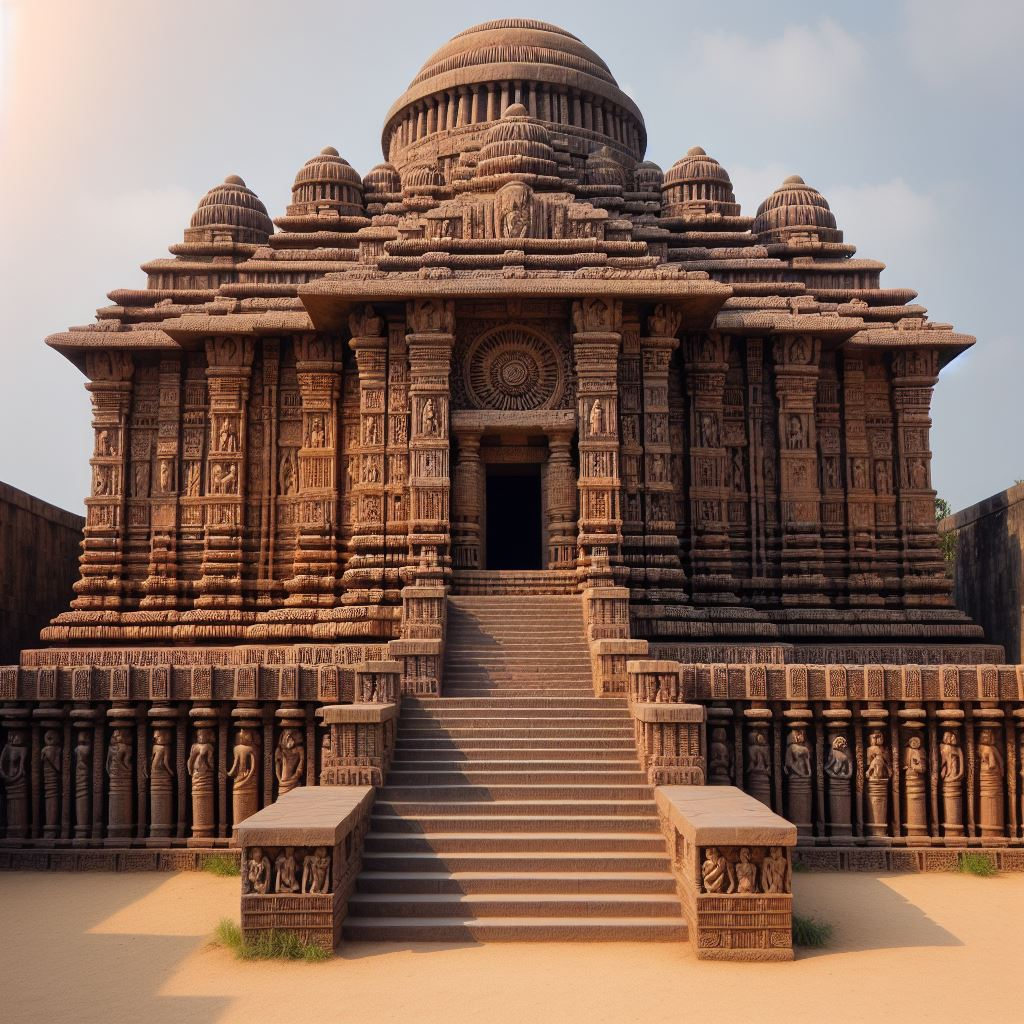
The Sun Temple at Konark, a UNESCO World Heritage Site, is an architectural marvel located in Odisha, India. Built in the 13th century by King Narasimhadeva I of the Eastern Ganga dynasty, it is dedicated to the Hindu sun god, Surya. The temple’s intricate stone carvings depict scenes from Hindu mythology, celestial beings, and daily life. Designed in the shape of a colossal chariot with intricately carved wheels and horses, the Sun Temple at Konark stands as a testament to Odisha’s rich cultural heritage and architectural ingenuity.
Kaziranga National Park
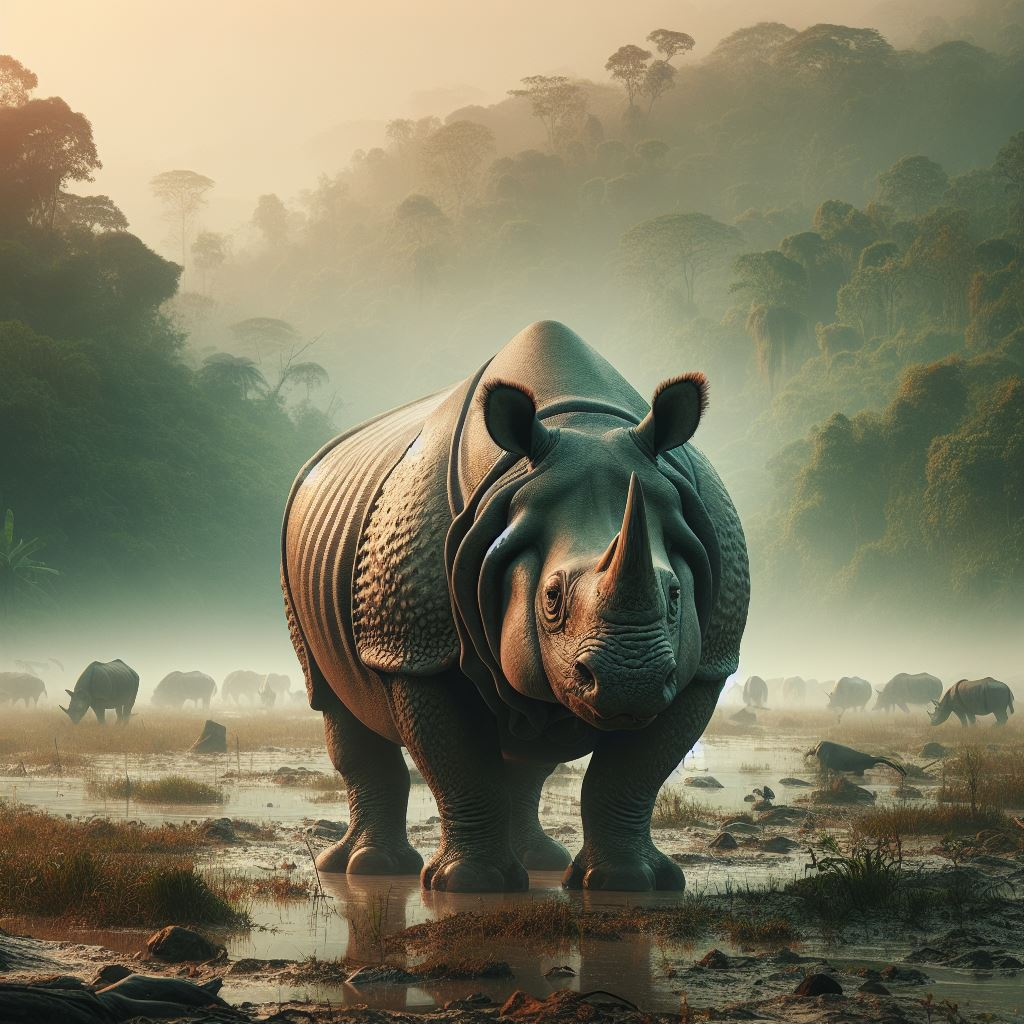
Kaziranga National Park, nestled in the northeastern state of Assam, India, is a UNESCO World Heritage Site renowned for its remarkable conservation efforts and diverse wildlife. Home to the largest population of the Indian one-horned rhinoceros, it also shelters significant populations of tigers, elephants, and wild water buffalo. The park’s unique ecosystem, comprised of grasslands, wetlands, and dense forests, provides a sanctuary for numerous endangered species and migratory birds. Visitors to Kaziranga can embark on thrilling safaris to witness these magnificent creatures in their natural habitat, making it a must-visit destination for wildlife enthusiasts and nature lovers alike.
Great Himalayan National Park
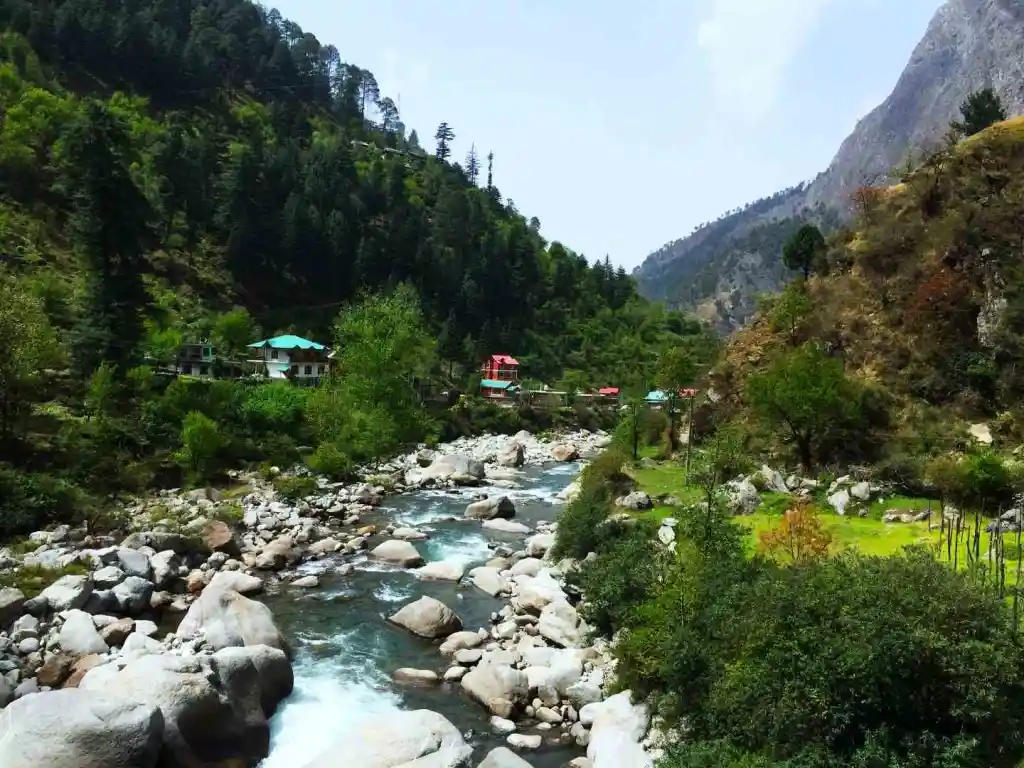
The Great Himalayan National Park, located in the Indian state of Himachal Pradesh, is a UNESCO World Heritage Site known for its breathtaking landscapes and rich biodiversity. Spanning over 1,171 square kilometers, the park encompasses diverse ecosystems ranging from lush forests to alpine meadows and snow-capped peaks. It is home to a wide array of flora and fauna, including elusive species such as the snow leopard and the Himalayan brown bear. With its pristine beauty and ecological significance, the Great Himalayan National Park offers visitors unparalleled opportunities for trekking, wildlife spotting, and experiencing the awe-inspiring grandeur of the Himalayas.